What the battery queue shake-up means for jobs
 ·14 October 2026·2 min read
Britain has far more battery storage in the grid queue than it needs, and the regulator is moving to clear it. For engineers and the businesses that hire them, that's good news. Here's why.
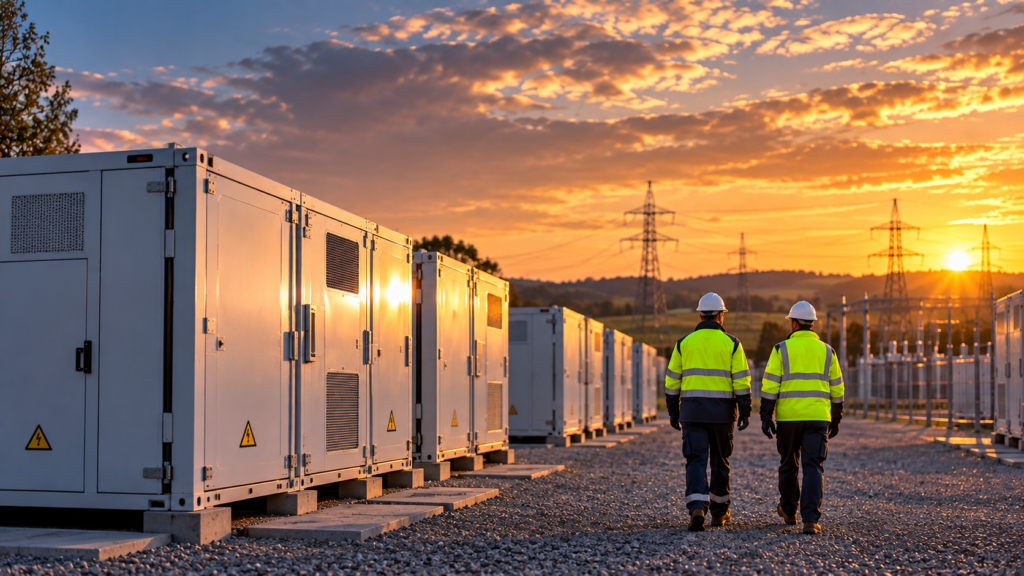
Battery storage in Britain has a queue problem. Ofgem says around 90GW of battery capacity is either operating or holds a firm place in the reformed connections queue. It estimates about 29GW is needed by 2035.
On 17 September, Ofgem proposed a fix. It’s minded to approve a new commitment fee that battery developers would pay to keep their place in the queue.
How the fee would work
The fee would kick in when a technology is more than 50% oversubscribed and stop once that drops below 25%. It would start at £3,000 per MW, so £300,000 a year for a 100MW site. If the oversupply persists, it would rise every six months, up to £25,000 per MW.
The consultation closed on 1 October. Ofgem expects to publish its decision before the end of the year.
The aim is simple. Developers without the money or the intent to build will leave the queue, and the projects that are real can get connected sooner.
Why that’s good for jobs
A queue full of speculative projects creates development work: land, planning and grid applications. It doesn’t create much work on site.
A shorter queue of funded projects is the opposite. Fewer projects means each one is far more likely to get built. That means construction, HV connections, commissioning, and then years of operations and maintenance.
There’s a lot to build. The government’s target is 23GW to 27GW of battery storage by 2030, up from 7.5GW at the end of 2025, according to DESNZ.
For engineers
The skills in demand are the ones that get a site energised and keep it running. That includes HV and LV electrical work, commissioning, SCADA and controls, and inverter and PCS experience.
If you’ve worked on generators, CHP, UPS or substations, a lot of it transfers. Our piece on moving from generators and CHP into battery storage covers how.
The best roles won’t necessarily be with the developer whose name is on the planning application. They’re increasingly with the EPC contractors, integrators and O&M providers who build and run the sites.
For employers
If your projects survive the queue, the competition for people who can deliver them will get tougher, not easier. The developers that hire their commissioning and O&M teams early won’t be the ones waiting for engineers when their connection date arrives.
If you’re hiring for battery storage, talk to us.
Sources: DESNZ, Energy Trends, grid-scale battery storage statistics (June 2026); Ofgem, Ofgem moves to free up grid capacity by tackling excess battery projects (Sept 2026); Ofgem, CMP470 minded-to consultation (Sept 2026); LexisNexis, Ofgem consults on CUSC modification introducing BESS commitment fee; S&P Global, UK battery storage glut prompts review of queue protections (April 2026).
Thinking about your next move?
We'll give you an honest view of what's out there, what you're worth and whether now's the right time. In confidence.