Where the data centre jobs will be
 ·28 October 2026·2 min read
Five AI Growth Zones, billion-pound campuses and a crackdown on speculative projects. Here's where the UK's data centre work is actually heading, and what it means for engineers and employers.
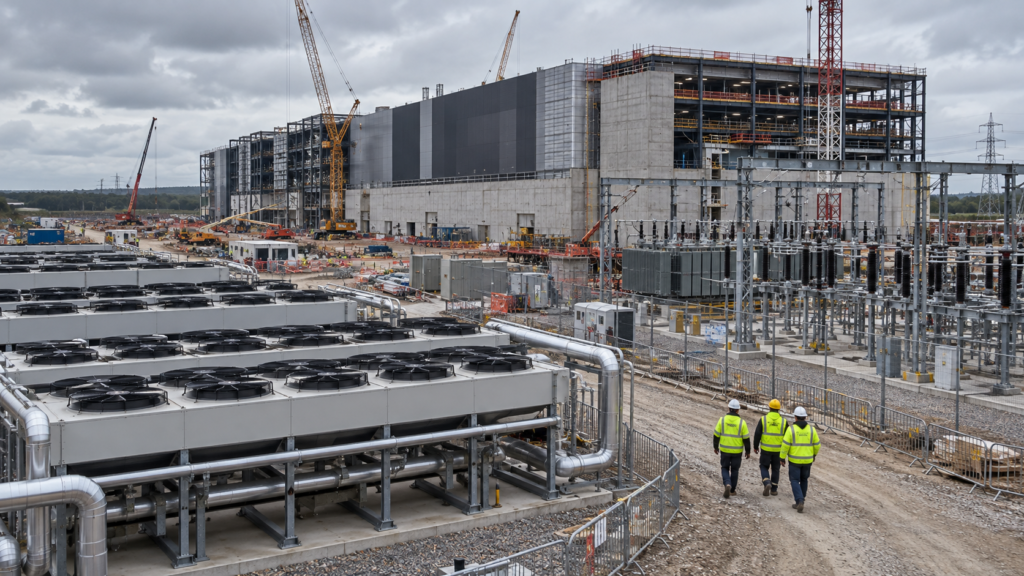
There’s no shortage of data centre headlines. The harder question for an engineer, or a business hiring engineers, is which projects will actually be built, where and when.
Two things are shaping the answer this year.
The government’s AI Growth Zones
The government has now named five AI Growth Zones: Oxfordshire, the North East, North Wales, South Wales and Scotland. They’re meant to fast-track large AI data centres with help on power and planning.
That matters because it takes the work away from the traditional cluster west of London. A UPS engineer in Northumberland or a chiller engineer in South Wales may soon have data centre work on their doorstep for the first time.
London isn’t standing still either. In July, CyrusOne won planning approval for a £1.5 billion campus in Southall.
Ofgem’s crackdown on speculative projects
The second thing is the grid queue. By Ofgem’s figures, around 73GW of data centre projects are waiting to connect, spread across about 315 projects. For comparison, Britain’s peak electricity demand this February was 45GW.
Not all of those projects will be built. Ofgem has proposed that data centres above 40MW pay a commitment fee of between £237,500 and £712,500 per MW to hold their place, refunded once they connect. It also wants them to hit set milestones, such as securing a customer and ordering long-lead equipment. Ofgem plans to decide by the end of the year.
As with battery storage, a shorter queue is good news for jobs. Projects that can pay to stay in the queue are the ones that get built.
Build first, then run
Data centre work comes in two waves. First comes construction: electrical and mechanical contractors, commissioning engineers and project teams. Then operations: critical facilities engineers, shift technicians, and the service engineers who maintain the UPS, generators, chillers and CRAH units for years afterwards.
The first wave is already stretched. Turner & Townsend found that all of its UK respondents were short of qualified mechanical and electrical workers.
For engineers
If you work on UPS, generators, switchgear, chillers or close control, your skills are wanted on data centre sites. That’s true whether the role is with a contractor, a manufacturer’s service team or the operator itself. Our piece on manufacturer, independent or end user covers how the three compare.
If a new site is being built near you, the commissioning phase is a good way in. It’s also worth asking who’ll maintain the site once it’s running.
For employers
If you’re bidding for data centre work in a new region, plan your people as early as your plant. Engineers who live within reach of a new campus won’t be short of offers, and the businesses that hire before the work starts will have first pick.
If you’re hiring for data centre work, talk to us.
Sources: GOV.UK, AI Growth Zones; Charles Russell Speechlys, Ofgem proposes to increase costs and tighten grid connection procedures for larger data centre projects (2026); CMS, Proposed data centre connection reforms (2026); Proximo, CyrusOne wins approval for £1.5bn UK data centre (July 2026); Electrical Review, Data centre boom deepens UK electrical skills shortage.
Thinking about your next move?
We'll give you an honest view of what's out there, what you're worth and whether now's the right time. In confidence.